


San Jose Flea Market in 1993: A Community Space Shaped by Culture, Memory, and Ritual

Updated: Feb 2
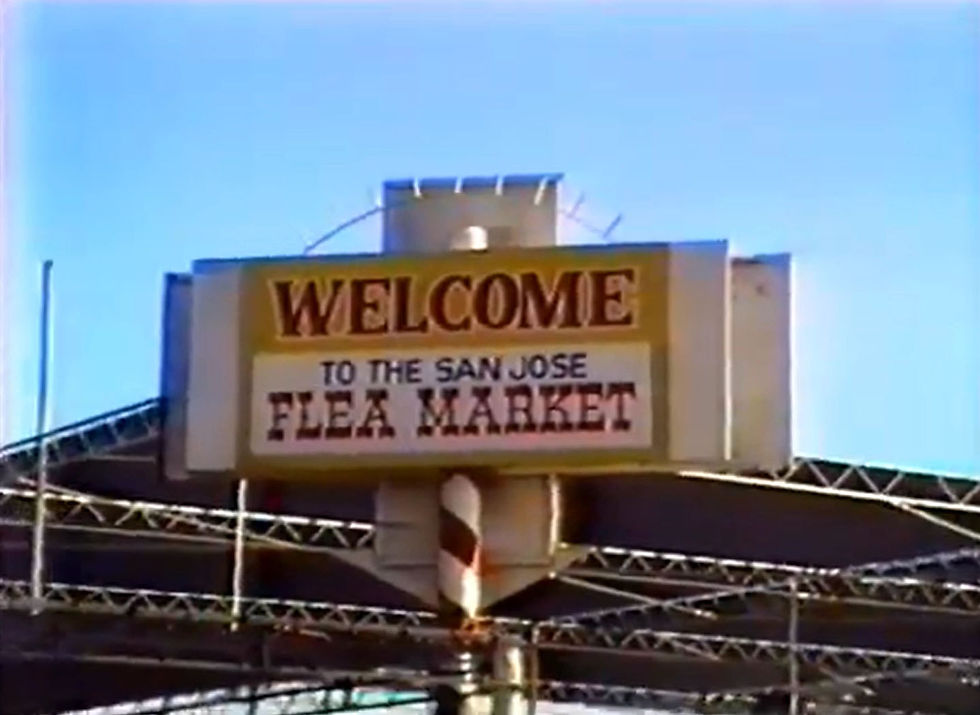
Here’s a video edit I made of the San Jose Flea Market from 1993, originally shared to my Instagram page in November 2025, along with the caption I wrote:
"The best part about going to the San Jose Flea Market as a kid was the live mariachi music and the cheap cassette tapes you could buy there.
They were five bucks each or three for twelve. I never realized it back then, but every one of them was counterfeit. You could tell because the shells were solid white or black instead of clear, like the real ones. The sleeves were one-sided color copies of the album covers, no foldout liner notes, no lyrics. I didn’t care though. I don’t think anyone did.
I remember begging my mom and dad for money so I could buy albums by 2 Live Crew, AC/DC, and The Fat Boys. But as much as I loved those tapes, nothing compared to the live music.
As a kid, the San Jose Flea Market was the first place I ever heard a live mariachi band and it blew me away. Actually, thinking back, it may have even been the first place I ever heard a live band in my life. It was loud, and even though I couldn’t understand what they were singing about, it didn’t matter. I loved what I was hearing, and the raw energy struck a chord with me."
That’s why the San Jose Flea Market meant so much. The music, the chaos, the little treasures. We all loved it, and I still do.
What the San Jose Flea Market was like in the early 1990s
For many families, the San Jose Flea Market wasn’t an occasional destination. It was a weekly ritual. Sundays were structured around it. Church in the morning, the flea market after. It was a place children learned how the world worked, not through instruction, but by observation.

It functioned as a kind of childhood landmark, the way amusement parks function for other families. Except this version didn’t require tickets or mascots. It was sprawling, unpredictable, and built for wandering. Kids got lost there. Often. Sometimes repeatedly. That wasn’t a failure of supervision; it was part of the experience. Getting lost meant being absorbed into the crowd, then found again by the same social gravity that held the place together.
What stands out in memory is not any single moment, but the repetition. The return. The familiarity of routes walked hundreds of times. The sense that this place belonged to you, even if you didn’t own anything inside it.
For working-class families, especially immigrant families, it became a version of Disneyland that didn’t ask you to leave your culture at the gate.
Why the San Jose Flea Market mattered to families in the 1990s
The flea market in the early 1990s was deeply intergenerational. Grandparents, parents, and children occupied the same space, but not in the same way. For some, it was leisure. For others, it was work. Often, it was both at the same time.
Many families didn’t just shop there, they sold there. Weekends meant setting up stalls, unloading vans, arranging merchandise, watching kids between customers, and packing everything back up at night. Children learned early how money moved, how deals were made, how long a day really was.

Some parents worked the produce rows or snack bars. Others sold toys, socks, CDs, furniture, or clothes. There were families pulling in serious income during the flea market’s peak years. This wasn’t a side hustle, it was an economy. An informal one, but no less real.

For children, this blurred the line between family time and labor. It normalized work as something communal rather than hidden away. Parents didn’t disappear into offices. They were present, visible, working with their hands while still being parents.
That visibility mattered. It shaped how value, effort, and survival were understood.
Music, bootleg tapes, and cultural access at the San Jose Flea Market
The counterfeit cassette tapes weren’t just cheap entertainment, they were access. Access to music that might not have been affordable otherwise. Access without gatekeeping. Access without explanations.
No one cared that the tapes were fake. What mattered was that you could take music home with you. Music that sounded dangerous, rebellious, or grown-up. Music that felt like it came from somewhere else but still belonged to you.

Live music worked the same way. Mariachi bands, banda groups, and other musicians didn’t perform on elevated stages. They moved through the space. The music mixed with conversations, footsteps, and commerce. It wasn’t presented as culture, it simply existed.

For many kids, including my sister and I, this was our first exposure to live performance. We would listen, walk away, come back, and hear it again over and over throughout the day. We loved it and it's all our grandma would talk about when recalling all the times she came to the Bay Area to visit our family.
Food traditions at the San Jose Flea Market in the 1990s
Food at the San Jose Flea Market in the 1990s wasn’t curated. It wasn’t photographed. It wasn’t branded.
It was eaten standing up, walking, or sitting wherever there was space. Corn dogs, fries in red cups, churros right at the entrance. Chicken plates with beans and garlic bread. Nachos, tamales in the parking lot, soda carts weaving through crowds. Beer sold openly, casually, without ceremony.

Food functioned as a constant. You didn’t plan meals around it, you responded to hunger when it showed up. Certain items became anchors in memory not because they were exceptional, but because they were consistent. They marked the beginning of the day. Or the midpoint. Or the signal that it was time to leave.
That reliability made the space feel safe. Familiar. Grounded.
Why chaos and freedom defined the Flea Market experience
The flea market was not sanitized. That’s part of why it worked.
There were things kids probably shouldn’t have seen. Arguments. Security intervening. Questionable merchandise. Items that existed in legal gray areas. The occasional brush with danger. That exposure wasn’t framed as trauma, it was framed as life.

Children learned situational awareness early. They learned how to move through crowds, how to negotiate attention, how to stay close without being held. The space demanded engagement.
There were no phones documenting every moment. No algorithms shaping experience. You had to be present because there was no alternative.
That presence is what many people remember most.
How the San Jose Flea Market functioned as a community hub
In the early 1990s, the San Jose Flea Market functioned as a system rather than a destination. It wasn’t just a place to buy things, it was where information circulated. Where relationships were maintained. Where people saw each other regularly, even if they didn’t exchange names. That idea of space serving people instead of managing them echoes places like the San Jose IBM campus in the 1960s, where design still respected the humans inside it.
It served as a hub for communities that didn’t always see themselves reflected elsewhere. Language barriers dissolved. Cultural references didn’t need explaining. The market didn’t ask anyone to perform assimilation to participate.
That made it powerful.
That same sense of unplanned gathering would surface again a few years later during Metallica’s surprise 1996 parking lot show in San Jose, when a record store lot briefly became a shared cultural space.
What changed at the San Jose Flea Market over time and what was lost
Over time, the market shrank. Physical space was reduced. Parking disappeared. Vendors left. Development crept closer. The atmosphere shifted.
What was lost wasn’t just scale, it was density of experience. The feeling that everything and everyone existed together in one place. That unpredictability. That messiness.

As regulation increased and commercialization reshaped priorities, the flea market became more transactional and less communal. The sense of ownership, the sense that “this place is ours” faded. You can see a similar pattern play out in the transformation of downtown San Jose from the 1970s to today, where density and efficiency often replaced openness and ease.
For many, the loss feels personal. Not because change is inherently bad, but because the original version of the market met needs that no longer have obvious replacements.
Why 1993 was a peak year at the San Jose Flea Market
1993 sits at a crossroads. The flea market was still expansive. Still chaotic. Still deeply rooted in working-class and immigrant culture. It existed before digital mediation reshaped how people gather and remember.
This video montage isn’t about romanticizing the past. It’s about documenting a social structure that worked. Imperfectly, loudly, and without polish.

It’s about remembering what public spaces once offered: belonging without permission, culture without curation, and memory built through repetition rather than spectacle.
The lasting impact of the San Jose Flea Market on a generation
The San Jose Flea Market didn’t just sell things. It shaped people.
It taught kids how to navigate complexity. It taught families how to survive together. It taught communities how to gather without needing justification.
Watching footage that was shot there in 1993 isn’t just a nostalgia bomb. It’s a reminder of what was possible when space prioritized people over efficiency.

Some places don’t disappear all at once. They fade. They shrink. They lose color slowly. But the memory remains intact because it was shared.
And that’s what this video, and this moment in time, still carries.


Comments