


The San Jose IBM Campus in the 1960s: Architecture That Respected People

Updated: Jan 24
When I first discovered these photos of the San Jose IBM campus in the 1960s, I couldn’t get over how beautiful it was. Not flashy. Not loud. Just confident, intentional, and deeply considered.

It’s pretty mind-blowing how much care went into something so utilitarian. A corporate tech campus, of all things, designed as if the people who worked there mattered. The buildings were modern, confident, and never hostile. They sat in the landscape instead of fighting it. They felt optimistic. Proud. Even loving.
That’s what sticks with me the most when I look at these, the sense that someone, somewhere in the design process, cared about the humans who would spend their lives inside those walls. Compare that to what we build now, and the contrast is brutal.
Architecture is a mirror of our values
Architecture is never neutral. The buildings we construct say a lot about how we see one another. About what we think people deserve. About whether human comfort, dignity, and joy are even part of the equation. That same shift becomes impossible to ignore when you compare downtown San Jose in the 1970s to what stands there today.

When a society builds with care, proportion, and beauty, it signals optimism. It says: you matter enough for us to try. When it doesn’t, the message is just as clear. Over the past ten years, especially with residential design in San Jose, architecture has shifted in a way that feels openly hostile to human beings. What was once meant to complement its surroundings and elevate daily life has been replaced by structures that feel disposable, joyless, and interchangeable. This isn’t an accident. It’s a reflection of priorities.
Even corporate campuses used to be human
That’s what makes the old San Jose IBM campus so striking. This wasn’t a museum or a cathedral, it was a workplace. And yet it was designed with intention. The lines were clean but warm. The scale was thoughtful. The layout respected both the land and the people moving through it.

Mid-century modern architecture, especially here in the Bay Area and in Silicon Valley understood something we seem to have forgotten: function doesn’t excuse ugliness.
Even at its most practical, design could still aim for harmony. It could still believe that beauty mattered, even in daily routines. Especially in daily routines. The campus didn’t just house workers, it communicated something to them every day they showed up: you’re part of something considered and deliberate. That message is almost completely absent now.
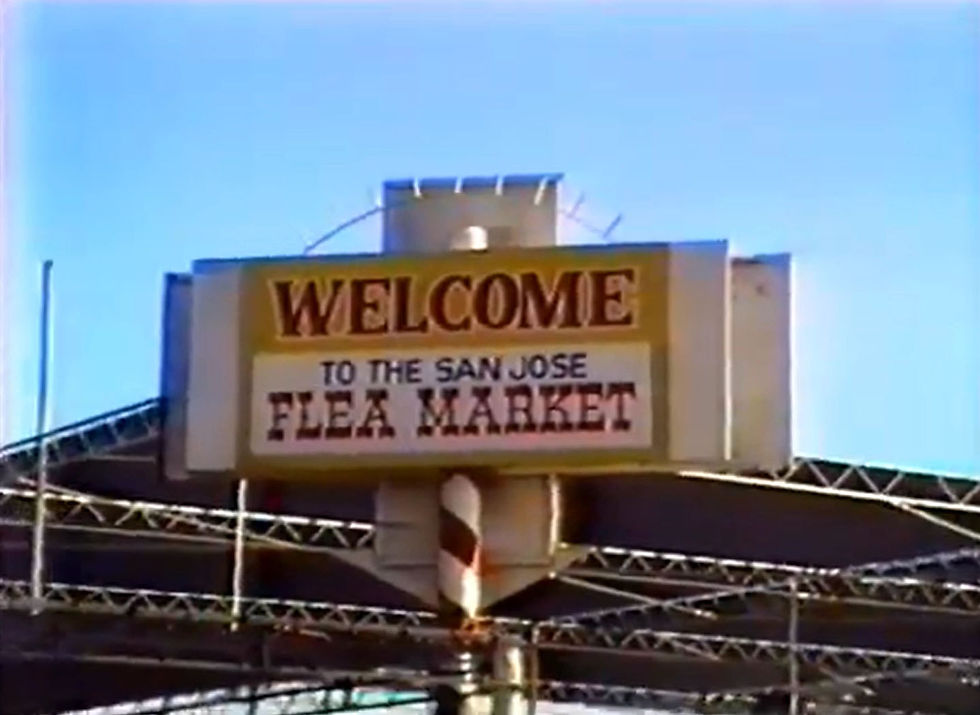
That same sense of shared space once existed in places that weren’t designed at all, like the San Jose Flea Market in the early 1990s, where culture and community shaped the environment instead of developers.
From pride to disposable boxes
Architecture today feels rushed. Cheap. Temporary. Like it’s built to be demolished before anyone gets attached. Residential buildings in particular have become aggressively anti-human. Everywhere you look, the same bland forms rise up: flat facades, harsh angles, fake materials, no sense of place. They’re not meant to be loved. They’re not even meant to be noticed. San Jose is full of these buildings now, they’re everywhere.

They exist to extract rent and that’s it. When you strip away care, identity, and beauty, what you’re left with is a product, not a home. A unit, not a place to live. A box designed to hold people, not serve them. And people feel that, whether they can articulate it or not.
“Dorms for Adults” and the message they send
My buddy Chris and I call them “Dorms for Adults.” You know the ones. Massive, identical housing complexes popping up everywhere at record speed. Same color palette. Same windows. Same lifeless geometry. No charm. No personality. No soul. They look temporary, even when they’re brand new.

What are you saying when you build something like that? You’re saying the people who live there don’t deserve beauty. That their lives are interchangeable. That permanence, identity, and pride are luxuries reserved for someone else. This kind of architecture doesn’t just reflect indifference. It teaches it. It conditions people to expect less. To accept ugliness. To believe that feeling unsettled in your own home is normal. That’s not neutral design. It shapes how people live and what they come to expect.
The death of recognition and identity
You can see the same shift everywhere. McDonald’s used to be instantly recognizable. Love it or hate it, it had an identity. Color. Shape. Presence. It existed in the world as something deliberate. Now they’re gray boxes. Designed not to be noticed. Designed not to be remembered. Designed to blend into the same bland visual noise as everything else.

When everything looks the same, nothing stands out. When nothing stands out, nothing feels special. And when nothing feels special, people stop expecting it. This is what we’ve normalized.
Beauty is not cultural, it’s human
Some people will argue that beauty is subjective. That what we’re seeing is just changing tastes. But that argument collapses the moment you look outside your own culture. If you showed these 1960s photos of the old IBM campus to someone walking down the street in Tokyo, Paris, or São Paulo, and asked them what they thought, they’d likely say the same thing: that’s beautiful.
Because beauty isn’t arbitrary.
A Shinto temple in Kyoto is beautiful not because it’s Japanese, but because it reflects balance, proportion, and the symmetry of nature. Those principles translate across cultures because they’re rooted in how humans experience space.
We know beauty when we see it. We always have. What’s changed isn’t our ability to recognize it. It’s our willingness to prioritize it.
Mid-century optimism vs. modern indifference
Mid-century architecture, even at its most functional, was shaped by optimism. There was a belief that design could improve life and that buildings could uplift instead of drain. Today’s structures feel cynical by comparison. They don’t aspire to anything beyond efficiency and profit. They don’t ask how a space feels to live in, only how quickly it can be built and how much it can extract.

The result is a landscape of lifeless boxes in San Jose, repeated on a grander scale across the entire Bay Area. Places that don’t invite care, pride, or belonging.
What this says about us
Architecture is a long-term statement. It outlives trends, executives, and quarterly reports. When we build places that feel hostile, cheap, and disposable, we are embedding those values into daily life. We're telling people quietly and constantly that they aren't worth the effort. That message accumulates.
It shows up in how people treat their cities, their neighbors, and themselves. It shows up in apathy. In resentment. In the sense that everything is temporary and nothing is worth protecting. We didn’t lose beauty by accident. We traded it away.
We Can Still Choose Differently
These 1960s photos of the San Jose IBM campus aren’t just nostalgic artifacts. They’re proof. Proof that even large institutions once believed in building with care. Proof that functionality and beauty are not enemies. Proof that design can respect human beings instead of managing them.
We still know how to do this. The question is whether we think people deserve it.
All photos by Bob Shomler

Wonderful write-up! Looking forward to seeing more like this, especially covering San Jose!