


Downtown San Jose Then and Now: The 1970s vs Today

Updated: Jan 24
In 2006, senior architect Gerald Greenleaf, who was working for the San Jose Redevelopment Agency at the time, came across a dusty box that had been sitting in storage for decades. Inside were dozens of photographs taken in 1975 by an agency employee whose name has been lost to time.
The photographer had conducted an exhaustive street-by-street survey of downtown San Jose, quietly documenting the city as it existed in that moment.

Greenleaf scanned the photos and later used them in a presentation to show what downtown San Jose looked like in 1975. At the time, they were simply a record. Today, they feel like something else entirely.
When these images are placed side by side with photographs of the same streets today, the effect is immediate and disorienting. Nearly half of the locations are completely unrecognizable. The rest have changed so dramatically they feel like completely different places.
These then and now photos do more than show redevelopment. They force a reckoning with memory, identity, and what it means for a city to change.
Downtown San Jose in 1975: Familiar, flat, and full of space
Downtown San Jose in 1975 was not glamorous. Even people who lived there at the time will admit that. The streets were wide. The buildings were low. Many blocks were sparse, sunlit, and strangely empty. Parking lots interrupted the urban fabric. There were fewer trees, less shade, and a lot of exposed concrete and asphalt.

Some people looking at the photos today describe the city as bland. Others say it looked hot, bare, and unfinished. A few compare it to Reno or other mid-century American downtowns that never quite decided what they wanted to be.
And yet, for many, these images hit hard. There’s a quiet familiarity in the way the streets curve. In the signage. In the scale. It’s a city that feels slower, smaller, and easier to read. Roads made sense. You could see the sky. You could orient yourself without towering buildings closing in.
For those who grew up here, or moved to San Jose in the 1970s, 80s, or early 90s, the photos unlock something deeply personal. Not just memories of places, but memories of being, cruising downtown, killing time with friends, hanging out with nowhere particular to go and nowhere pressing to be.
The redevelopment of downtown San Jose in the 1990s
Much of what we see today in downtown San Jose is the result of a massive redevelopment push that gained momentum in the 1990s. This was the era when the city made a concerted effort to reinvent itself as a modern urban center.

Major construction projects reshaped the skyline and the street grid. New hotels went up. Cultural venues arrived. Office towers, transit infrastructure, and large-scale developments transformed entire blocks at once.
For some, this period represents San Jose finally becoming a real city. A place with density, nightlife, and ambition. For others, it marks the beginning of a slow erasure, not of buildings alone, but of character. That contrast becomes clearer when you look at places like the San Jose IBM campus in the 1960s, where even corporate design reflected care, proportion, and optimism.
This photoset captures this shift perfectly. In some frames, the old city feels almost provisional, as if it were waiting for something to happen. In others, today's version feels heavy, crowded, and permanent.
Neither version tells the full story on its own.
Downtown San Jose then and now: What changed and what stayed
One of the most striking things about these photo comparisons is not just how much has changed, but what hasn't.

Certain buildings act like anchors in time. They survive waves of construction and continue to orient the city around them. When you spot one in a side-by-side image, it creates a sense of continuity that’s almost comforting.
At the same time, entire blocks have been wiped clean and rebuilt from scratch. Streets that once felt open and loose now feel tightly managed. Where there were empty lots and low-slung storefronts, there are now dense clusters of new construction.
Some people see improvement in this. Others see loss. Most people feel both.
How trees and streetscape changed downtown San Jose
One detail that comes up again and again when people look at these photos is the trees. Downtown San Jose in 1975 had far fewer of them. The streets look exposed, bright, and harsh in the sun. Today, the city is noticeably greener. Trees line sidewalks. Shade softens the hard edges of buildings. The temperature of the city, visually and emotionally, feels different.

For many viewers, this is one of the clearest improvements. The added foliage makes downtown feel more humane. More livable. More like a place meant for people to walk through rather than rush past.
It’s a reminder that small changes, repeated over decades, can dramatically alter how a city is experienced.
Memory, music, and lost places in downtown San Jose
What makes these images so powerful isn't just architecture. It’s association.
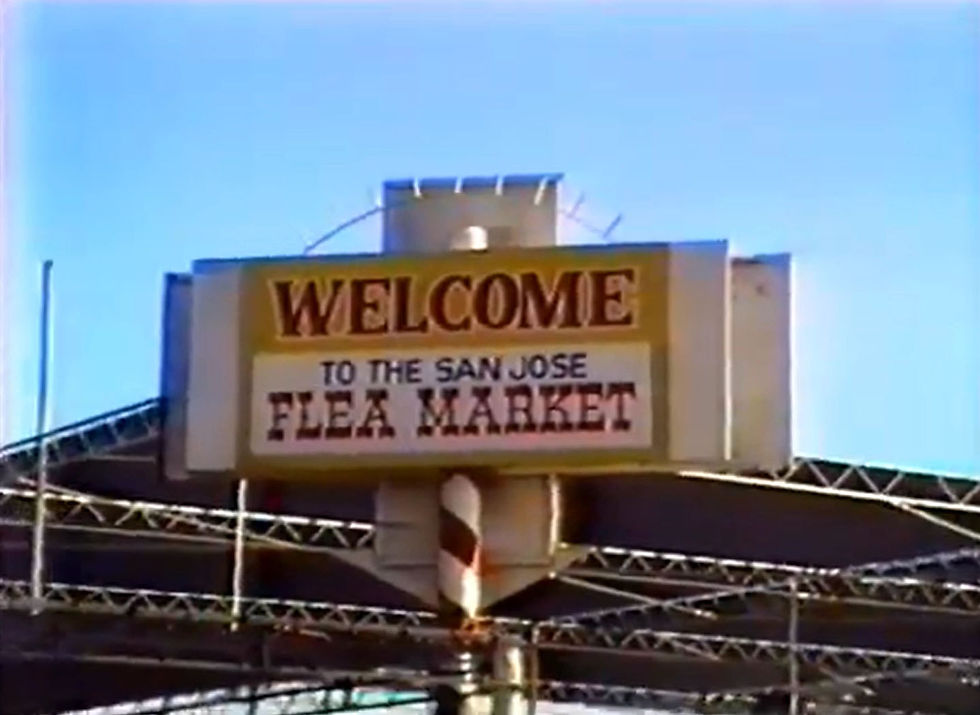
A single storefront can trigger memories of concerts, first jobs, late nights, and chance meetings that changed lives. Mentions of long-gone venues, packed shows, sticky floors, and unforgettable bathrooms aren't jokes, they’re evidence of how deeply places embed themselves in personal history. The same kind of memory lives on in places like the San Jose Flea Market in the early 1990s, where music, routine, and repetition anchored entire childhoods.

For many, downtown San Jose isn't just where things happened. It’s where they happened.
When those places disappear or transform beyond recognition, it can feel like losing access to a part of your own past. Even people who weren't there in 1975 feel this. Seeing what a place used to look like can stir memories of other cities, other eras, and other versions of yourself.
That’s why these images bring people to tears. They’re not about the city alone. They’re about time.
Was downtown San Jose better in the 1970s or today?
This is the question everyone asks, and the photos refuse to answer it cleanly.
Some viewers look at the 1975 images and see charm, openness, and authenticity. Others see emptiness, underdevelopment, and missed potential. Some think downtown San Jose looked its best in the 1990s, when things felt balanced. Others believe it looks better today, even if it’s not quite there yet.

What’s clear is that every era leaves something behind.
The 1970s version of the city offered space and legibility. The modern version offers density and ambition. Neither is perfect. Both reflect the priorities of their time.
A city constantly becoming something else
San Jose has always been a city in transition, evolving from orchards to subdivisions, from a modest downtown to a regional hub, and from sprawl to vertical growth.
The 1975 photos capture one pause in that long process. A moment when the city hadn’t yet decided what it would become. The present-day images show a city still figuring that out.
This constant becoming can be exhausting. It can also be beautiful.

Cities are living things. They absorb the hopes, mistakes, and compromises of the people who shape them. Looking at these images side by side reminds us that no version of San Jose was inevitable. Every change was chosen, one project at a time.
Why these downtown San Jose photos still matter
These then and now photos of downtown San Jose matter because they slow us down. They interrupt the assumption that the present is the natural endpoint of progress.
They ask quieter questions. What did we gain? What did we lose? What do we miss? What are we glad is gone?

Most importantly, they remind us that cities are not abstractions. They’re collections of memories, routines, and relationships layered over time.
Even when buildings disappear, the feelings they held don’t. Downtown San Jose in 1975 is gone. Downtown San Jose today will one day be gone too. What remains are the images, the stories, and the recognition that change is never just physical.
It’s personal.
All photos by the City of San Jose

My formative years were spent inSan José. I entered SJSU in the early 70s when downtown was an obliterated wasteland. The enlightened Urban Removal theories of the 50s and 60s had destroyed the beauty and function of downtowns in many major American cities. Downtown San José lost irreplaceable civic buildings and gracious homes. I recall several beautiful late 19th Century homes that were cut off from the city by the 280 Freeway: they deteriorated over time and were eventually razed. Downtown was scarred and treeless. Block after block consisted of dirt parking lots. The beautiful neighborhoods surrounding the University became THE dumping ground for the Valley’s mentally ill and addicted populations. South First Street was filled with cheap …